Showing posts with label El Salvdor. Show all posts

Thursday, March 3, 2016

Leaving El Salvador – February 16 – 19, 2016


Back On The Bicycle – A Few Words Of Experience

For sailors who have to be tied to the dock for some reason, here’s our word of advice: Get back "on the bike” (or “in the saddle” if you prefer that metaphor) a lot sooner than we did if you can! The 21+ months we went without sailing Abracadabra made for a steep learning curve. It’s not that we had forgotten how to ride the bicycle, necessarily -- we just didn’t enjoy the feeling that at any moment we might skin our knee! 

And if you haven’t been away from the dock for a long time, here’s some advice about "re-entry": Be kind to yourself when you find that you are undergoing an unexpected Exercise in Re-learning. It’s to be expected. To minimize the unexpected, here are a couple of preparatory baby steps we found invaluable:

  • We not only ran our newly rebuilt engine at the dock and while on the mooring ball, we drove Abracadabra up and down the estero for several hours. Putting the engine under a real load brought to light a couple of problems we were able to address before finding out about them . . . out there. (Even better would have been a couple of day sails/motors -- if we hadn’t been in an estuary guarded by a formidable sandbar entrance.)
  • We also put ourselves under a modified "real load” situation by spending two weeks on a mooring before making that first long trip. That helped us acclimatize to the swing and sway of Abracadabra’s “at anchor” movements – which isn’t the same as sailing, but is closer than being at the dock. It also forced us to rely on our dinghy for several weeks which brought to light a problem with our outboard engine that we were able to get repaired in a familiar environment. (And of course even better would have been a couple of overnight anchoring trips near to “home” – if we hadn’t been an overnight sail away from the nearest calm anchorage.)


In summary – don’t just untie from the dock and go. Dock neighbors of ours tried that and had to be towed back in a day later . . .

The rest of this post is about our first few days at sea and at anchor. Enjoy hearing about our re-entry process -- but please be kind enough to laugh with and not at us!

Departing Estero Jaltepeque (aka Bahia del Sol), El Salvador – February 16, 2016

P1030664
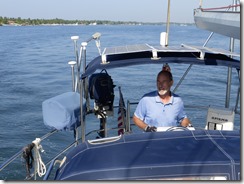
Captain Bryce - Motoring Out
Still Wearing His Port Captain Meeting Clothes


Departure began around 08.00 when Bill Yeargen and his trusty assistant Hiram cast Abracadabra off from her mooring. We motored to the dock at Bahia del Sol Hotel, quickly tied up and Bryce dashed off to finalize our governmental obligations: paying the $40 for our international zarpe (zarpe = the document that authorizes a boat’s transit) and getting departure stamps on our passports. All went smoothly in large part because the day before Bryce had provided the Port Captain a crew list and paid the fee for our stay in El Salvador (temporary importation privileges cost $30 for every month or part thereof). 

Molly handled our one planning snafu – laundry the hotel had returned to us the day before departure . . . unwashed. (Ugh. Nothing like starting a two week trip with an already large pile of dirty laundry festering in the basket under the bed.) Happily, on departure morning she was given clean clothes and sheets. She also paid our hotel tab: $46 = $16 for 16 pounds of laundry, the rest for three meals and about ten sodas/beers. The “cruisers club” at this hotel is a bargain.

At 09.15 we followed our compatriots on Attitude to the mouth of the estuary. As we talked through what we had lashed down and stowed away we realized that the auxiliary anchor was missing from its bracket on Abracadabra’s port side. We don’t know exactly when it went walkabout but believe it was while we were moored. An upsetting reminder to stow removable equipment whenever we leave the boat: if we don’t put it away, someone may take it away. Even, apparently in quiet and safe Estero Jaltepeque.

P1030667
Following Attitude


We motored slowly behind and watched as Attitude was guided across the sandbar entrance which had been living large in our memories since our accident there some 21 months before. 

P1030668
Surfin Safari -
We Didn't Have To Go Through This Surf,
We Were Guided Through The Calm Spot, Off Stage Left


At 09.40 Abracadabra crossed over the bar without incident, the newly rebuilt engine purring solidly.

 
To The Golfo de Fonseca – February 16 – 17, 2016


We motored out to pick up a SSE wind and took a deep breath, happy to have faced a personal demon.

And then we realized that we had lost a fender. Ack - that means we had gone across the bar, fenders flying!  [Non-sailor note: A fender is the inflated bumper guard tied to the side of a boat to prevent dock scratches. It’s very basic seamanship to stow fenders upon departure (e.g., San Francisco Bay sailors refer to Sailing With Fenders Out as Showing Off Your Marina Del Rey Racing Stripes).]  We don’t think anyone got pictures of our clownish departure but we can’t just cover the whole sordid story up because . . . someone already knows. Attitude radioed later in the morning to tell us they had picked up our floating fender! It’s nice to know it has found a good home. Clearly we were really distracted by the discovery that our secondary anchor had gone walkabout. That’s our story and we’re sticking with it.

Our overnight passage was mostly uneventful. We were happy to sail slowly because we didn’t want to arrive at our destination - the Gulfo de Fonseca, some 100 miles east - in the dark. [Non-sailor reminder: Abracadabra’s average speed is some 3 – 5 knots an hour; 7 knots an hour is racing!] We had a particularly lovely, gentle sail during Molly’s 22.00 to 01.00 watch.

At times we luxuriated in being able to rely on that amazing piece of 19th century technology: the diesel engine. Having a reliable engine came in handy particularly when, near 03.30 Bryce found himself passing through an area in which five large fishing trawlers were operating. They were clearly more interested in fishing than in accommodating a sailboat’s need to sail off the wind (sometimes we wonder if they even understand a sailboat’s directional limits). Bryce was happy to be able to start the engine and . . . get out of their way. 

[Side Note: If we seem somewhat vague about wind speed in this and future posts, it’s because the wind speed indicator stopped working a couple of months ago. Before this trip we didn’t think being without a wind speed indicator would be a problem. After all, sailors should be able to read the wind and know when to shorten sail (reef). What we didn’t think about was how difficult it is to read the wind when motoring – so by times we weren’t sure whether we could turn off the motor and sail. At times that made us rely on the engine longer than we wanted. At other times, we turned the engine off . . . only to find ourselves flailing about in winds too light to move Abracadabra along. Bryce thinks we will get better at making observational readings of wind speed over time. Or - we can just get the damned wind indicator fixed.] 

Golfo de Fonseca

Introductory Note: The Golfo de Fonseca is a large bay shared by El Salvador, Honduras and Nicaragua. It forms part of El Salvador’s eastern border, is Honduras’ only access to the Pacific and is part of Nicaragua’s north-western border. We wanted to visit this gulf, rather than shoot by on our way from El Salvador to Nicaragua, because it might be our one chance to visit Honduras by sea.
P1030670
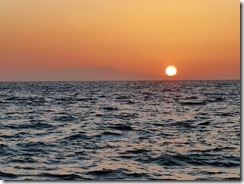
Sunrise Over Nicaragua


We reached Punta Amapala, the western border of the gulf, near dawn. No trawlers this time, just dozens and dozens of unlit fishing pangas. Later, as we began to turn into the gulf we were reminded that several sailors had told us they had passed on the gulf because it was just “too hard to get in". By 08.00 the wind was on our nose. As we pushed on into the gulf the wind began to build and there was quite a bit of chop. It became so rough we didn’t like the looks of our planned first-night anchorage – the southern anchorage at Isla Meanguera, El Salvador which was reported to have good protection from north winds. It didn’t look all that protected to our re-training eyes.

We decided to try for Isla El Tigre, Honduras which is supposed to have calmer anchorages, but as we rounded the western shore of Meanguera the passage was completely blocked by nets strung by the local small-boat fishing fleet. Completely. Blocked. We decided that approaching the nets and waiving our arms to see if we could get someone to move them wouldn’t do much to make the world a better place, so we turned around and decided to give Isla Meanguera another try.

 
Isla Meanguera, El Salvador – February 17 – 19, 2016


We anchored at 13.15 in what felt to us like very bumpy seas and some rather unnerving northerly gusts. We decided to forgo our usual celebratory anchoring beer because it looked like we would be sitting an anchor watch. We have since decided that this anchorage is actually fairly well protected – it is just plagued by some unsettling sound effects. As the wind sweeps down the protective hills it builds and sounds a bit like the soundtrack of a “dark and stormy night” movie. A real testament to the psychological power of sound.

These unsettling sounds made us less than confident in our long un-tested anchoring skills, so we sat anchor watch; one of us dozing in the cockpit and checking some bearings every time the gusts rattled us. And in the morning – there we were, right where we had anchored. But tired. Very tired. [Another thing to re-learn: what it feels like to sail all night long . . . ]

P1030671
Lookin' A Little Tired There, Hon . . .
Try Some Lipstick, Maybe


After a calming pancake breakfast we decided we were unwilling to battle the northerly gusts to get to El Tigre on that particular day. Internet weather forecasts (yes, our new Iridium satphone worked!) showed promisingly light winds on Friday. We stayed and did a few boat projects and took naps. We didn’t sit anchor watch on the second night; we were beginning to get used to the howling sounds.

P1030676
Betsy Ross --
Mending Our Discourteous Looking Courtesy Flag


The anchorage wasn’t without its compensations. It is home to a small fishing fleet and we got to watch their comings and goings and mysterious shore lights in the night. On the morning we left the anchorage a panga with five polite fishermen approached to ask who we were and where we were from. Two of them spoke some English. They expressed amazement that there were only two people aboard (one of them a woman, no less!). Another line of questioning was how much we had paid for Abracadabra (this seems to be a theme with fishermen). Bryce side-stepped giving a figure, knowing it would be staggering to an El Salvadorian fisherman (even if totally underwhelming to any North American in the process of purchasing a sailboat). Bryce asked them if they had worked in El Norte and the two partial English speakers said they had been roofers “up there”; one had children there. They welcomed us to El Salvador and departed for work, leaving us to laugh about irrepressible human curiosity.

We also wondered about our little one-panga survey and whether in any random group of five Salvadoreño fishermen, two would have worked in the United States. We were saddened to think of the little children growing up “up there” with far away fathers.


Next post: On to Honduras and yet more re-learning!


Thursday, February 4, 2016

We Interrupt This Road Trip . . . Off The Dock, 2016!


We interrupt our posts about last December's road trip to Guatemala for the following important bulletin: 

The crew of Abracadabra is VERY happy to report that Abracadabra is OFF THE DOCK! Yes, after 20 months at Paradise Fishing Lodge she has been set free(er). Cue Please Relase Me . . . let me goooooo . . . 


Poco a Poco (Little by Little)

February 1 we threw off the dock lines and motored the gigantic distance of 5+/- kilometers (yes, that's about 2.7 nautical miles) towards the mouth of the Bahia Jaltepeque. Abracadabra is now at a mooring ball for a couple of weeks. Our plan is to take some time to retrain ourselves to life off the dock - and to see if any other necessary repairs manifest themselves.  


Abracadabra -- Off The Dock

Our New Neighborhood

We were able to change location once the new dinghy arrived and, with the help of our dock neighbor Greg (s/v Eire), was inflated and put to sea.


Bryce and Greg at Work

Captain Bryce Making The Delivery To Our Slip

We were startled by how white the dinghy was when it was first unpacked. But after only a week or so rubbing up against dock tires (tires tacked to docks to avoid chafing) and being insulted / assaulted by birds  . . it's not quite so white.


No New Info - Just A Funny Picture of Neighbor Greg
[Note Paradise Manager Willy Garcia
Busily Supervising In The Background]

So, here we are swaying in the tidal changes of the estuary, re-learning what it's like to be unable to step off the boat and just . . . walk around. What have we learned / been reminded of so far? 

  • It's waaaay cooler on a mooring ball. We are loving the afternoon breeze!
  • Our bodies have reacted to the motion of the estuary by demanding afternoon naps. We're glad we didn't just jump aboard and try to sail (i.e., stay awake) overnight to our next destination.
  • No sport fishing crews arrive at 6 a.m. to wash the boat next door here. But the roosters of the nearby village are louder. So the sleep period is pretty much a draw.  
  • Dock power has made us lazy. We are re-learning to turn the power inverter (turns our battery power to AC power for certain appliances) off once the coffee is ground, and to turn off the fans when nature's own breeze is blowing through the hatch.
  • The wind generator was a worthwhile expense; it made enough power yesterday to permit us to watch two hours of dvds last night. 
  • Not surprisingly, the outboard engine was not happier for having been idle for two months while it waited for a new dinghy to operate (it runs, but needs a new low-speed jet to be really happy).
  • Internet is stronger at the nearby hotel than at Paradise, but requires a dinghy ride to access - more planning required to Skype or blog.
  • Trash / garbage storage is a drag.


Proximo Lugar? (Next Place?)

Our plan, weather and equipment dependent of course, is to depart the estuary and sail South (which from here actually requires us to sail east-ish) to the Gulf of Fonseca. We are targeting a departure mid-month, which will give our lazy selves a chance to leave when the tide is high at mid-morning (departing at dawn . . why?). This will give us a few hours of sailing before being out over night. 

In the meantime here we sway on the incoming and outgoing tides; watching the neighboring boats engage in the same dance; sharing information and boat parts with neighbors; thinking up a name for the new dinghy. Molly suggested "The Rabbit" (as in "from the magician's hat") until Bryce pointed out that he didn't want to suggest that it might disappear. . . 


We now return this program to the Guatemala channel. 
  

Tuesday, January 12, 2016

El Salvador's Ruta de Las Flores - November, 2015


Later in November we took another "project break" and spent a weekend traveling along the Ruta de las Flores (Route of Flowers) with friends Bill and Jean (operators of the Cruisers Rally to El Salvador and a mooring field in Bahía Jaltepeque). The Ruta de las Flores is one of the eight tourist routes established by the El Salvadorian tourist board. Along this route, which runs north-south in the western part of the country one can take a canopy tour (aka a zip line tour), hike to a water fall, go mountain biking, ride horses and generally engage in all sorts of energetic activities.  

None of which we did. 

And we weren't bowled over by the flowers along the route either, though that may be because we've been spoiled by the tiny but beautifully maintained grounds at the Paradise Fishing Lodge (Gracias, Rigo!)

But we had a very nice weekend looking at charming, sleepy little towns:


Murals in the Naive Art Style Very Popular in El Salvador


A Pedestrian Street - Without Pedestrians


Iglesia San Andrés in Apaneca - Closed For Renovation

On our first afternoon we stopped in the village of Salcoatitán for lunch at a food stall along the main square. Following all the rules we chose a clean, popular stall where the food smelled good and three of us (Bill was the culinary outlier) ordered the specialty - Caldo de Gallina (chicken soup). It looked great and the vegetables in chicken broth tasted delicious. But the side of grilled chicken was, well . . . we began to suspect it was rubber-joke-chicken though we could not find any hidden cameras.  It was so tough and rubbery we could not pull the meat from the bone and put it into the broth. We wrestled with our chicken for awhile and then did the only thing one can do in such a situation - we laughed, called it a loss . . . and headed back to buy another bag of the fabulous freshly made potato chips that we really wanted to eat anyway.  

Our home for the night was Finca Santa Leticia a coffee plantation and hotel outside of the village of Apaneca. The rooms are in rustic-looking cabins spread around the property and the main building/restaurant is very High Sierra. The grounds are lovely and the restaurant - well, it's okay. 


Reception and Restaurant

Pre-Thanksgiving Turkey Spotting

Happily we had brought our own pre-dinner drinks and snacks and were so full of cheese, crackers and wine that the main meal wasn't really necessary.  It was nice to talk with Jean and Bill about the life they have built for themselves in El Salvador. 

The next day we asked the woman at the front desk about the archaeological sight we had read was on the hotel's grounds. She waved us toward an open gate across the highway from the hotel and told us there wasn't a charge, but that we might want to tip the guide. There was no literature about the site at the hotel. If we hadn't asked about it we would have come and gone without knowing it existed! 

We drove into the open gate and up a rutted dirt "road" though acres of coffee trees, glad to be in a rental SUV. We came to a gate that had a nice "Archaeological Site" sign above it - but no guide was in evidence. We opened the gate and drove through continuing until the "road" became too narrow to drive even a rental car. We got out of the car, followed the path and were soon met by several barking dogs. By the side of the path a woman was tending to the front yard of a little house. She quieted the dogs and waved us forward, telling us that the site was "cuatro cuadras" (four blocks) ahead. Hmmm. . . an interesting measurement (not meters or portions of kilometers, but blocks) to use in the middle of a coffee plantation. 

And then there we were. Under two different palapa structures, surrounded by nicely-tended gardens, were two gigantic "potbelly style" stone monuments. And the cutest little man with a giant machete who seemed to be the care-taker of the area and the guide.


Bill and Our Guide At One of the Monuments

The Second Monument

Our Guide -
Alas We Failed To Write Down His Name and Have Forgotten It

Bill And The Necessary Cell Phone Camera

Our guide explained that these monuments are believed to be from a pre-Maya culture that flourished in the area some 600 year BCE. And there we were - touching them. 

We tipped our guide as we left, and the second best 'site' of the day was his big grin. It must be hard to make a living looking after an archaeological site no one knows about.


[Travel tip: In El Salvador you may find that not everything worth seeing is well marked. If you find a note on a map that piques your interest -- keep asking. It may be of no consequence to the locals and not well advertised.] 

And speaking of archaeological sites that ARE well marked - our next posts will be about our four week trip to/through Guatemala.  We hope you will enjoy that trip as much as we did.


Monday, January 4, 2016

Suchitoto, El Salvador - October / November, 2015


Anyone who has read the few, but universally grim stories in the U.S. or Canadian press about El Salvador is probably wondering why we choose to travel in such a violent place. In other posts we've shared our personal "lightening strike" theory of life and travel in statistically dangerous countries, so we won't repeat that here. In this and our next post we'll just share our experiences traveling inland in Salvador -- and perhaps show you a bit about the everyday story which doesn't make good newspaper copy.  

[As an aside we can't help noting that, according to Facebook there are thousands of armed people wandering through Walmart stores in the U.S. every day . . . you're on your own if you want to brave Walmart.]


Around Town

The town of Suchitoto bills itself as the cultural center of El Salvador. And while it's not exactly London or Paris it has a nice art center; lovely, human-scale 19th-century architecture; 


Sleepy Suchitoto Above Lago Sucitlan

a couple of nice restaurants; a good coffee bar (Casa de la Abuela); a funky Marxist-themed bar; a good climate; cool-ish weather; a theater (nothing showing during our visit); and at least one very nice hotel (the Los Almendros de San Lorenzo - we neglected to take pictures, but the hotel's website is very nice).

The central plaza is sweet and the church that occupies one side has a beautiful, wooden interior (unusual to those familiar with Mexican churches).


Iglesia Santa Lucia


Wooden Interior 

Walking around town one can see other evidence that faith plays an important part in the life of the community . .. . 


A Plaque Honoring the Recently Canonized
Archbishop Oscar Romero


Abigail's God Bless You Store


. . . people living their everyday lives . . . 


Grocery Shopping In The Newly Renovated Market 
(Gotta Love The Market Ladies' Cute Apron Frills)


Commercial Tortilla Factory (Tortillaria)

. . . and signs that many people are committed to addressing the community's domestic violence problems which we were told stem in part from the separation of families and the general culture of violence resulting from the civil war. 


"In This House We Want a Life
Free of Violence Against Women" -

This Stencil is On Many Houses In Town

Suchitoto is the home of the Center of Art For Peace, opened in 2005 for the expressed purpose of supporting peace through the arts. What's not to like about that?


We Were There

A Wood Screen Detail - The Center Is Housed In A
Beautiful Ex-Convent Building

An Oral History Interview Took Place 
While We Were Visiting

Art Lessons Are Available -
Differing Views of the Oral History Interview Space


On a less elevated plain, Suchitoto is also home to the Museum of a Thousand Plates.  For only $1 one can see over 1,000 . . . plates. It's very kitschy -- but the operator is nice and he gave Molly the best tourist road map of Salvador that we've found yet. The map was worth the price of admission. The plates - not so much.


)
One Of The More Than 1,000 Plates


Another visit that most tourists make is to the El Necio bar, decorated with Che and FMLN posters. 

[Side note: The Frente Farabundo Marti Para La Liberacion Nacional (the Farabundo Marti Front For National Liberation) was named to honor Farabundo Marti, the leader of an ill-fated 1932 peasant revolution. The FMLN was the leftist guerrilla umbrella organization during the country's civil war and now, as a result of democratic elections, the country's ruling party.]

We appreciated the bar's theme and enjoyed the breeze in the upstairs seating area but were thoroughly confused when the bartender couldn't make a rum and tonic. The menu listed gin and tonic, vodka and tonic and Cuba libre but we couldn't communicate to the bartender (despite Bryce's relatively good Spanish skills) how to take the rum (Cuba libre) and the tonic (gin/vodka and) and make . . . a rum and tonic. Perhaps our comrade needs some bartender 're-education' . . . 

A Fair!

A little fair was going on, which enlivened our walks around town.


Preparing the Ferris Wheel (Look Bottom Right)

A Kite Flying Event In The Plaza

Night-time Merry-Go-Round
Complete With Watchful Moms

Beauty Contestants In Training

Church Fundraiser

Out of Town

We hired a guide through the hotel to take us to a couple of the "must see" places outside of town. He arranged a boat ride on Lago Suchitlan. The lake is covered with water hyacinths (though this picture doesn't show them) which we thought might be an invasive species problem, but our guide assured us they act to purify the water in the lake. 


Lago Suchitlan


We also visited the Los Tercios waterfall which is quite beautiful, even in a relatively dry year. 


We Were There

We were fascinated by the geographic formation of the falls - Bryce's comment was that it was like walking through the beginning of time.


An Great Upheaval Took Place Here

The best part of our guide experience was our conversation over coffee about his family's life during the war. Both of his parents worked for the FMLN as educators and traveled the country explaining the FMLN's political and strategic positions. He gave us an interesting perspective on the effect this disruption had on his family and told us a bit abut his parents' lives since the end of the war.


Dia de Muertos

Our last day in Suchitoto was Dia De Muertos in Salvador (November 2). We stopped by the local cemetery on our drive out of town and were interested to see the public celebration of the day. The streets around the panteón (cemetery) were choked with traffic. The road leading into the panteón was lined with stalls of plastic flower vendors calling out "Ooon doh-lahr! Ooon doh-lahr poor flohress!" (Un dolar por flores - One dollar for flowers!) [Reminder: El Salvador's currency is the U.S. dollar.]


Un Dolar!

The panteón was absolutely jammed with people of all ages. Those entering the cemetery were carrying several dolars worth of plastic flowers. 


El Panteón

The atmosphere was energetic. Friends and family greeted each other with hugs and handshakes; there was live entertainment; it was not at all a solemn occasion.


Not Exactly Funereal Music

We had to laugh at ourselves. For years we had avoided going to cemeteries for Dia de Muertos thinking we might intrude on solemn family events. We knew that in some towns in Mexico the community is used to seeing outsiders in their midst - Oaxaca and Pátzcuaro are famous for accepting visitors at their celebrations. But we were never in those places, so we didn't know how our presence would be received. But clearly, unless Salvadoreños and Mexicanos celebrate very differently, we would not have been intruding on anything solemn! 

Travel Tips

Suchitoto is located in the northern part of El Salvador, about 60 kilometers (but at least a 1.5 hour drive) north-east of San Salvador. Driving in Salvador has its challenges but you shouldn't miss a trip to Suchitoto or a stay at Los Almendros. That said, having made the drive from San Salvador to Suchitoto in the dark (due to a very long day at the customs office at the airport) our recommendation is to make the trip in daylight hours. The roads are sketchy, the signage even more so, the country doesn't seem to have real road maps (see above re: tourist map) and Mapquest directions are not terribly helpful. When the nice man at the gas station gives you directions - tip him. 

Another related driving tip: the market area of San Salvador is vibrant, crowded and exciting. But don't try driving through there at 5 p.m. on a Friday. Unless you have a fully insured rental car.

Next?

A drive along the Ruta de Las Flores.

Friday, January 1, 2016

2015 - Abracadabra's Year At The Dock


First: Adiós to 2015! 

As you can read in this blog, 2015 was a great travel year for us - but not a good year for Travels on Abracadabra.  In fact, there were no travels on Abracadabra at all in 2015 as she spent the entire year tied to the dock at Paradise Fishing Lodge in Bahia Jaltepeque, El Salvador. First it was because both Captain Bryce needed to bond with his new hip and Abracadabra needed a new engine, but both of those mechanical details were resolved by October.

In anticipation that 2016 will actually be a sailing year this post is a summary of the most recent reasons we have not been underway: mostly routine cruising issues (Cruising def: "fixing boats in exotic places"), but one a true "adventure in equipment failure".

In October All Seemed Well

When we posted in early October a late October departure was looking feasible. Our first projects, which were in large part about making life in the tropics more comfortable, were completed or underway and going well. [Warning: If you're not interested in boat bits you may wish to skip the next couple of headings . . . ]

           Bow Hatch Retrofit:  We turned Abracadabra's Canadian-style bow hatch (one that deflects cold breezes) into a tropical-style bow hatch (one open to warm bow breezes) by removing the hatch, scraping out the bedding goo, turning it around and re-bedding it. Nighttime breezes into the V-berth have made sleeping much more pleasant.


It's All About The Breeze

          Wind Generator:  Bryce, with the assistance of José, an industrious young guy who works for the marina and does projects for us on his days off, installed our new-to-us (gracias for the good deal, Gallant Fox!) KISS wind generator. Gotta love a business that promises an easy system in its very name. We're looking forward to more "free electricity" to power our fans!  


KISS Wind Generator

          Cosmetics:  José brought our sad looking "front door" (hatch boards) back to life:


A Welcomed Improvement!


Then There Were Some "Unanticipated Projects"

Just as it looked like we were getting it all together, a few things went sideways. 

          Rainy Season Thrill:  Molly reached into the clothes locker in the bow and found. . . wet clothes. Ugh. A leak. Bryce tracked the source and we were relieved to find a relatively simple fix: a deck plate above the anchor locker had worn through allowing the anchor locker with its plugged up drain to fill with rain water in the recent series of downpours. Happily he figured this out before opening the weeping access plate between the anchor locker and the clothes locker . . . otherwise the water pooled in the anchor locker would have come gushing onto our bed! Fix: a deck plate ($13), two unanticipated loads of laundry ($14) and a trip to San Salvador to buy a deck plate ($50 for car and driver). We're filing the payment for José to wash out the anchor locker under "routine maintenance". 

          Importation Tango: Once the fear of having some sort of catastrophic leak was behind us, Bryce began installing a new starter battery -- only to realize that the trickle charger for the battery had gone kaput. Hmmm. And then he realized that the GPS antenna we thought had miraculously survived last year's knockdown actually  . . . hadn't. Hmmm again. 

The local chandleries didn't have either item, so Bryce went internet shopping and had a trickle charger and GPS antenna delivered from the U.S. The Salvadorean customs process turned out to be remarkably inexpensive ($5) because the customs officials (surprisingly) decided the items could be treated as replacement parts for a boat in transit (which, in fact, they were, but we didn't expect to be able to make that case). We think the officials were motivated to kindness because we had both spent five hours of our lives hanging around the airport customs terminal (which has spectacularly uncomfortable plastic chairs). Bryce spent his time standing in various lines and getting various pieces of paper signed and schmoozing with the customs officials; Molly was engaged in a study of El Salvadorean fashions (Bryce was among only six men in the entire place wearing shorts). Importation Tip: If you decide not to hire an importation agent and do this process yourself, go armed with plenty of patience, strong Spanish language skills and a good book. If you are importing more than $1,000 worth of equipment you'll have to hire an agent (no exceptions).

The GPS antenna was installed along with the new satellite telephone antenna that we had  brought down with us:


Abracadabra's Antenna Forest

And The New Satellite Phone Antenna

The new trickle charger was also installed. 

Both worked and, once again we began to feel optimistic that we could actually go sailing. 


And In November It Fell Out From Under Us -- Literally

On November 10, while zipping along the estuary in our little dinghy after a nice lunch at the larger hotel/marina at the mouth of the estuary, we began talking about when we could get sailing . . . 

Apparently the sea gods found this to be an exercise in hubris. 

Bryce interrupted the flow of this conversation to say something along the line of WTF. The dinghy's transom (non-sailors: the wooden back of the boat between the inflated pontoons) was leaning outward. It had become disconnected from the floor of the dinghy and water was gushing in. Even worse (or at least as bad as the possibility of sinking) - the transom was folding down into the water taking the outboard motor with it into the river. 

It took a few distressed minutes to realize that the rubber gasket that holds the transom to the floor and pontoons of the dinghy had completely let go. 


Gasket - Unconnected to Transom.

Water continued to flood in under the now-detached transom. Bryce jammed his foot against the bottom of the transom, pressing it sort-of back into place, keeping the outboard motor out of the river and marginally slowing the flood. He powered the motor down, which also slowed the flood. Molly dug out our high-tech bailing device (the bottom of a plastic drink bottle - gracias Pedro!) and began to scoop river water out of the dinghy. We putted along ever so slowly . . . feeling really stupid that we had not taken any life jackets with us on a four kilometer ride . . . and eventually completed the last kilometer of our trip to the dock. 

Neither we nor the outboard motor went swimming or sinking in the river.  But now we needed a dinghy. 

[For non-sailors: A dinghy acts as the "car" for a sailboat at anchor or on a mooring ball. While it would be possible for us to go sailing without one, sooner or later food or beer would have to be purchased or clothes would have to get to the laundry. Traveling without a dinghy would require us to (a) become the annoying people always asking other boats for a ride to shore or (b) spend only the occasional night at anchor and travel from marina to marina. Neither sound like a good plan to us.] 

It took us several weeks to sort through our options. We researched and then rejected trying to repair the gasket because everyone who has attempted this repair told us: save your sanity; at most you'll get three months out of the repair and then you'll find yourself in the same disintegrating position, just in a different bay or river. 

So we began figuring out how to get a replacement inflatable dinghy in or to El Salvador and found:

  • Nothing in-country was small enough or light weight enough for Abracadabra to carry. 
  • There was a small, light-weight dinghy in a chandlery on the Rio Dulce along the Caribbean coast of Guatemala - a day's drive away. Hmmm -- rent a truck, stay at least one night, convince Salvadorian customs officials that the dinghy was a replacement for a boat in transit (?), look for an importation agent (were there any right at the border?), probably pay full importation cost . . . muy complicado.  
  • Purchasing from our usual discount chandlery in the U.S. and having it shipped to Salvador also sounded muy complicado: bigger than a bread box, too heavy for UPS or FedEx, we'd need a freight forwarder and an importation agent . . . mucho undetermined dolares (dollars - literally - El Salvador uses U.S. currency) and tiempo (time).
  • The big national chandlery could deliver an appropriate dinghy to our marina within four to six weeks for mucho dolares but with a significant reduction in hassle factor.


We finally decided to throw a clearly determinable amount of money at the problem and ordered from the big Salvadorian chandlery. Four to six weeks seemed dishearteningly long but we decided that it gave us time for a road trip that would otherwise be spent dealing with delivery and importation issues. We ordered the dinghy on Thanksgiving and it should (might?) be in Miami next week. So it may be here within the six week outside delivery date -- but we are now expecting more like seven or eight.

So that's the sad story of why we're still here. 

But as Molly's brother Robert once said when we complained about being detained by the Mexican government for two months near Puerto Vallarta: "Stuck in Puerto Vallarta - boo hoo." With that perspective in mind, we'll also report that, though we've had a few frustrated and frustrating days, in between contemplating our situation --


Contemplation - Before Our Afternoon Pool Moment

But We've Also Had Time To:

           Watch Life On The Estuary 

Including local traffic:


Mom and Dad Go Fishing

Color Coordinated Cayuco (Dugout Canoe) Paddlers

Sport Fishing Expeditions


the weather:

Pot of Gold Somewhere Nearby . . . 

and a moonrise or two: 


          Socialize With Cruisers and Ex-Pats

We never miss a Sunday potluck swim at Linda and Lou's (ex-pats from Carmichael, California!):


Solving The World's Problems


We gave thanks at Casa L&L on U.S. Thanksgiving -- for friends and, not incidentally for the wonderful pig roast they put together with Bill and Jean of La Palma moorings.


Lin and Lou and Pig

Apple - A Nice Touch

One Saturday we joined a group at a restaurant on stilts in the estuary for a really yummy fish dinner:


Bill and Jean's "Pink Panga" At The Restaurant On Stilts

Dining Al Fresco

Open Fire. Wooden Structure.
What Could Go Wrong?

And we have joined Lin and Lou for lunch a couple of times - once at Estero y Mar, a Disney-esq place down the coast:


L&L Taking A Walk In The Painted Woods

Real Parrots

And Painted Parrots

Dancing Horses On The Beach

           And Get To Know The Neighbors

We have also achieved nodding / "buenos dias" level acquaintance with some very interesting neighbors. 

The Salvadorian Navy's drug enforcement force (it's been described as "like the DEA") operates from a drug-seizure property down the road. The story we've been told is that the house was taken from a lawyer who represented drug dealers. The force uses the Paradise Fishing Lodge to dock their boats on occasion. One afternoon, fascinated by their balaclavas and body armor (remember it's about 85 degrees and 80 percent humidity here) Molly asked if she could take a photo. They agreed - and then invited her on board to pose along with the Balaclava Boys! 


Molly With The (Intimidating) Salvadorian Navy

[Side note: There are two U.S. Coast Guard C-130's that fly from the nearby airport.  We watch our tax dollars at work once and sometimes twice a day, as these behemoths leave to circle over the Pacific. We assume their job is to identify interception targets for the Balaclava Boys.]

Sooooo . . . 

We've also had some in-country travels and a four week trip to Guatemala and Belize -- way too much for one post. So if you're interested in what there is to see and do in Salvador, Guatemala and/or Belize, stay tuned and travel along with future posts. 

And of course we'll let you know when our eagerly anticipated joint Christmas gift - the new dinghy - arrives!